
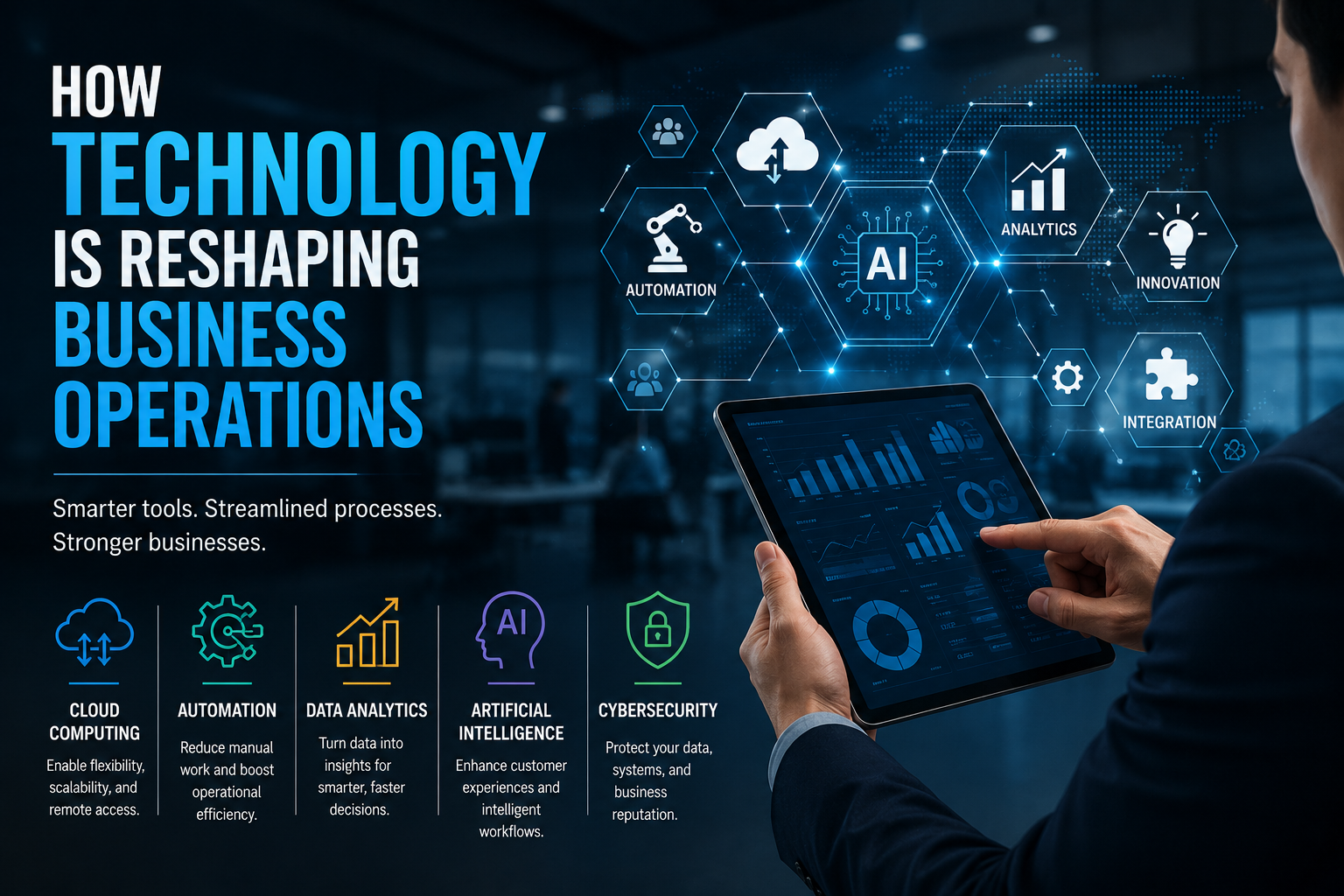
Discover how Business Technology is transforming operations through automation, AI, cloud computing, data analytics, and digital collaboration.
How Technology Is Reshaping Business Operations
Technology has become a driving force behind modern business success. Organizations of all sizes are adopting digital tools to improve efficiency, reduce costs, and enhance customer experiences. From artificial intelligence to cloud computing, Business Technology is changing how companies manage daily operations, communicate with customers, and compete in global markets.
Businesses that embrace technological innovation are better positioned to adapt to changing market conditions and achieve sustainable long-term growth.
Automation Improves Efficiency
One of the biggest advantages of Business Technology is automation. Companies are using software to automate repetitive tasks such as invoicing, payroll, inventory management, customer support, and marketing campaigns.
Automation reduces manual errors, saves time, and allows employees to focus on strategic activities that add greater value to the organization.
Artificial Intelligence Enhances Decision-Making
Artificial intelligence (AI) is helping businesses process large volumes of data and generate valuable insights. AI-powered systems can forecast sales, identify customer trends, optimize pricing, and improve operational planning.
Businesses also use AI-powered chatbots and virtual assistants to provide fast, personalized customer support around the clock.
Cloud Computing Supports Flexibility
Cloud computing enables businesses to access applications, files, and data securely from anywhere with an internet connection. Employees can collaborate in real time while reducing the need for expensive on-site infrastructure.
Cloud-based solutions improve scalability, reduce maintenance costs, and support remote and hybrid work environments.
Data Analytics Drives Better Strategies
Modern businesses rely on data analytics to understand customer behavior, monitor performance, and identify growth opportunities. Real-time reporting allows organizations to make informed decisions based on accurate information rather than assumptions.
Data-driven strategies improve marketing effectiveness, operational efficiency, and overall business performance.
Digital Collaboration Improves Productivity
Communication platforms, project management software, and video conferencing tools allow teams to collaborate efficiently regardless of location. These technologies support remote work while improving coordination across departments.
Effective collaboration helps businesses complete projects faster and respond more quickly to customer needs.
Cybersecurity Protects Business Assets
As businesses become more digital, cybersecurity is increasingly important. Organizations invest in advanced security systems, employee awareness training, multi-factor authentication, and regular software updates to protect sensitive information.
Strong cybersecurity safeguards customer trust while reducing the risk of financial losses caused by cyber threats.
Customer Experience Becomes More Personalized
Businesses use technology to create personalized customer experiences. Customer relationship management (CRM) systems, AI-powered recommendations, and automated marketing campaigns help organizations understand customer preferences and deliver relevant products or services.
Personalization increases customer satisfaction, loyalty, and long-term business growth.
Smart Supply Chain Management
Technology is improving supply chain visibility through real-time tracking, predictive analytics, and automated inventory management. Businesses can monitor shipments, optimize stock levels, and reduce delays using digital solutions.
A more efficient supply chain improves customer satisfaction while lowering operational costs.
Mobile Technology Expands Business Access
Smartphones and mobile applications allow businesses to connect with customers anytime and anywhere. Mobile banking, digital payments, online shopping, and business management apps improve convenience for both businesses and consumers.
Mobile technology also enables employees to stay productive while working remotely or traveling.
Innovation Creates Competitive Advantage
Organizations that invest in Business Technology are often more innovative and adaptable. By adopting new tools and continuously improving operations, businesses can respond quickly to changing market conditions and customer expectations.
Technology-driven innovation helps companies remain competitive while creating new opportunities for growth.
Preparing for the Future
Businesses should continuously evaluate emerging technologies, invest in employee training, strengthen digital infrastructure, and develop long-term technology strategies. Organizations that embrace digital transformation today will be better prepared for future challenges and opportunities.
A proactive approach to Business Technology ensures sustainable growth in an increasingly digital economy.
Conclusion
Business Technology is reshaping business operations by improving efficiency, enhancing decision-making, strengthening customer relationships, and driving innovation. Automation, artificial intelligence, cloud computing, data analytics, cybersecurity, and digital collaboration have become essential tools for modern organizations. Businesses that invest in technology and adapt to digital transformation will be better positioned to achieve long-term success and remain competitive in the evolving global marketplace.
FAQs
1. What is Business Technology?
Business Technology refers to digital tools, software, and systems that help organizations improve operations, productivity, communication, and decision-making.
2. Why is Business Technology important?
It improves efficiency, reduces operational costs, enhances customer experiences, strengthens security, and supports business growth.
3. How does artificial intelligence support Business Technology?
AI automates repetitive tasks, analyzes data, improves customer service, predicts trends, and supports smarter business decisions.
4. Which industries benefit most from Business Technology?
Healthcare, finance, retail, manufacturing, logistics, education, hospitality, and professional services all benefit from modern business technologies.
5. How can businesses prepare for future Business Technology?
Businesses should invest in digital transformation, train employees, adopt cloud solutions, strengthen cybersecurity, monitor emerging technologies, and continuously improve their digital capabilities.
