
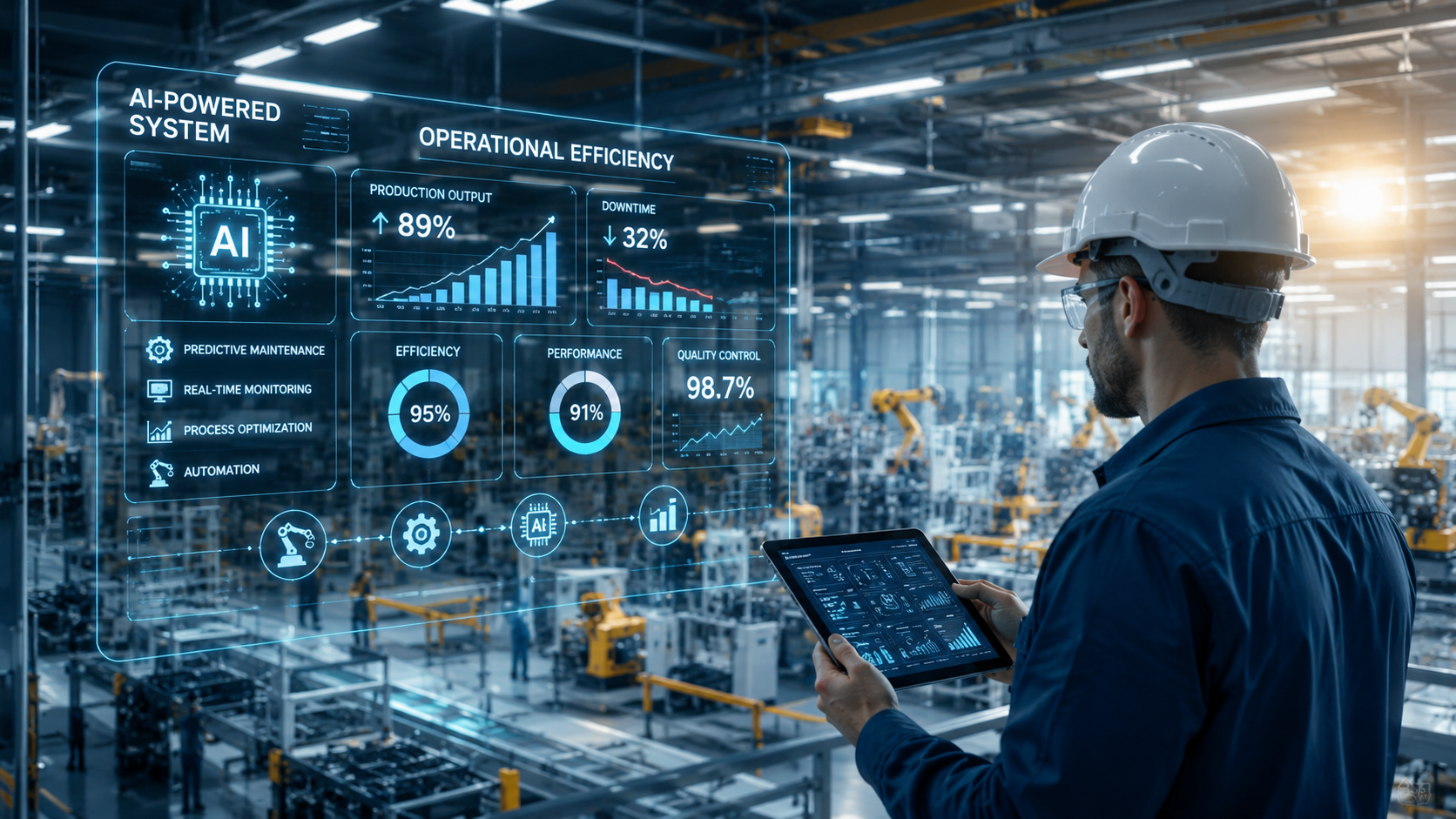
Discover how AI Business Efficiency helps organizations automate processes, improve productivity, reduce costs, and make smarter business decisions.
Artificial Intelligence and Operational Efficiency
Artificial intelligence is transforming how organizations operate by enabling smarter decision-making, automating repetitive tasks, and improving overall performance. As businesses continue to embrace digital transformation, AI Business Efficiency has become a key driver of productivity, cost savings, and long-term competitiveness.
From small businesses to global enterprises, organizations are using AI-powered solutions to streamline operations, enhance customer experiences, and adapt more quickly to changing market conditions.
What Is AI Business Efficiency?
AI Business Efficiency refers to the use of artificial intelligence technologies to optimize business processes, reduce manual workloads, and improve operational performance. AI systems analyze data, identify patterns, automate routine activities, and generate insights that help organizations make faster and more informed decisions.
By integrating AI into daily operations, businesses can improve both efficiency and accuracy across multiple functions.
Automating Repetitive Tasks
One of the most valuable applications of AI Business Efficiency is automation. AI can handle repetitive tasks such as data entry, invoice processing, appointment scheduling, inventory updates, and document management with speed and precision.
Automating routine work allows employees to focus on strategic initiatives, innovation, and customer engagement.
Improving Decision-Making
Artificial intelligence can process large volumes of data far more quickly than traditional methods. By analyzing historical trends, customer behavior, and operational metrics, AI provides valuable insights that support better business decisions.
Leaders can use these insights to identify opportunities, anticipate risks, and allocate resources more effectively.
Enhancing Customer Experience
Businesses are increasingly using AI-powered chatbots, virtual assistants, and recommendation engines to provide personalized customer experiences. These tools can respond to inquiries, offer product suggestions, and deliver support around the clock.
Improved responsiveness and personalization help strengthen customer satisfaction and loyalty.
Increasing Productivity
AI Business Efficiency enables organizations to complete tasks more quickly while maintaining consistent quality. Intelligent systems reduce processing times, minimize errors, and improve collaboration across departments.
Higher productivity allows businesses to scale operations without proportionally increasing operational costs.
Optimizing Supply Chain Management
AI supports supply chain operations by forecasting demand, optimizing inventory levels, monitoring supplier performance, and identifying potential disruptions. Businesses can improve logistics, reduce waste, and ensure products are available when customers need them.
Efficient supply chain management contributes to better financial performance and customer service.
Strengthening Risk Management
Artificial intelligence helps organizations identify unusual patterns, detect fraud, monitor cybersecurity threats, and assess operational risks in real time. Early detection enables businesses to respond proactively before issues become significant problems.
This strengthens organizational resilience while protecting valuable business assets.
Supporting Employees
Rather than replacing employees, AI often complements human expertise by handling repetitive processes and providing decision-support tools. Employees can dedicate more time to creativity, strategic planning, relationship building, and complex problem-solving.
This collaboration between people and technology improves both job satisfaction and business outcomes.
Challenges of AI Adoption
Successfully implementing AI Business Efficiency requires careful planning. Organizations must consider data quality, cybersecurity, employee training, ethical AI practices, and system integration. Building trust and ensuring transparency are essential for maximizing the benefits of AI technologies.
Businesses that approach AI strategically are more likely to achieve sustainable results.
Conclusion
AI Business Efficiency is reshaping modern organizations by improving productivity, automating workflows, enhancing customer experiences, and enabling smarter decision-making. As artificial intelligence continues to evolve, businesses that invest in responsible AI adoption will be better positioned to increase efficiency and remain competitive.
By combining human expertise with intelligent technology, organizations can build more agile operations, reduce costs, and create a strong foundation for long-term growth in the digital economy.
