
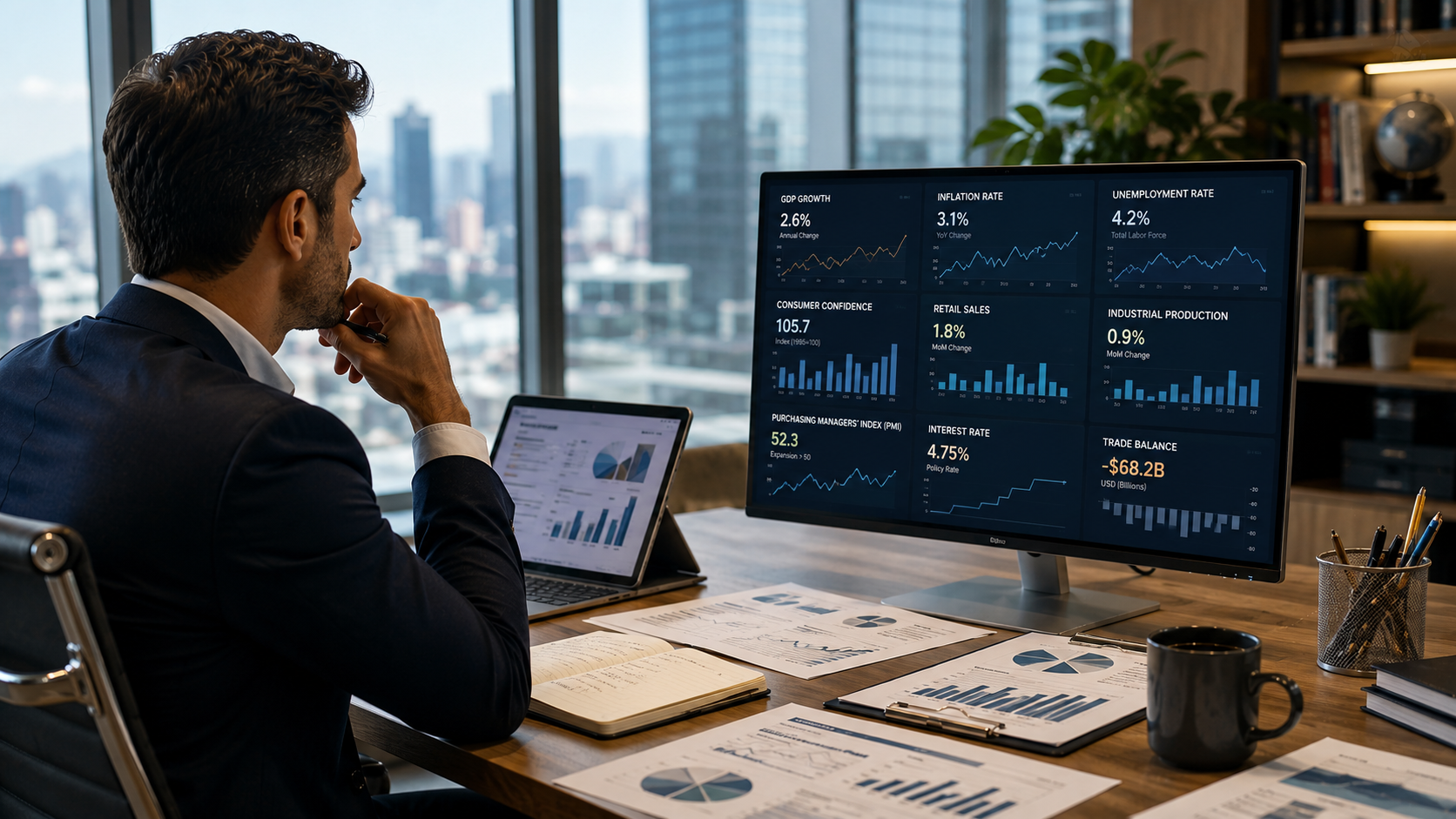
Learn which Economic Indicators businesses should monitor to make informed decisions, manage risks, and identify growth opportunities in changing markets.
Economic Indicators Every Business Should Monitor
Businesses operate within economic environments that constantly change due to shifts in consumer behavior, government policies, global events, and financial markets. Understanding Economic Indicators allows business owners, executives, and investors to make informed decisions, anticipate market trends, and prepare for future opportunities or challenges.
Rather than relying on assumptions, successful organizations monitor key economic data to guide strategic planning, manage risks, and improve financial performance. By regularly reviewing economic indicators, businesses can respond proactively to changing market conditions and maintain a competitive advantage.
What Are Economic Indicators?
Economic Indicators are measurable statistics that provide insight into the overall health and direction of an economy. Governments, financial institutions, and economists use these indicators to evaluate economic performance and forecast future conditions.
Businesses can use the same information to make better decisions regarding investments, hiring, pricing, expansion, and operational planning.
Gross Domestic Product (GDP)
Gross Domestic Product (GDP) measures the total value of goods and services produced within a country over a specific period.
Growing GDP generally indicates a healthy economy with expanding business opportunities, while slowing GDP growth may signal weaker economic activity that requires more cautious business planning.
Inflation Rate
Inflation measures the rate at which prices for goods and services increase over time.
High inflation can raise operating costs, reduce consumer purchasing power, and affect business profitability. Monitoring inflation helps organizations adjust pricing strategies, budgets, and financial forecasts.
Interest Rates
Central banks use interest rates to influence borrowing, spending, and investment throughout the economy.
Higher interest rates can increase financing costs for businesses and consumers, while lower rates often encourage borrowing, expansion, and investment. These Economic Indicators significantly influence business planning and capital allocation.
Unemployment Rate
The unemployment rate reflects the percentage of people actively seeking work but unable to find employment.
Lower unemployment often indicates strong economic conditions and higher consumer spending, while rising unemployment may reduce demand for products and services.
Consumer Confidence
Consumer confidence measures how optimistic people feel about their financial situation and the overall economy.
High consumer confidence generally leads to increased spending, while declining confidence may result in reduced purchases and more cautious consumer behavior.
Business Confidence
Business confidence surveys evaluate how optimistic companies are about future economic conditions, investment opportunities, and market demand.
Strong business confidence often supports expansion, hiring, and capital investment, while declining confidence may lead organizations to postpone major decisions.
Exchange Rates
Businesses involved in international trade should monitor currency exchange rates closely.
Exchange rate fluctuations affect import costs, export competitiveness, international revenues, and supply chain expenses, making them important Economic Indicators for global businesses.
Stock Market Performance
Although stock markets do not always reflect the entire economy, they often provide insight into investor confidence and expectations for future economic growth.
Businesses monitor financial markets to understand investment trends and broader economic sentiment.
Purchasing Managers’ Index (PMI)
The Purchasing Managers’ Index measures business activity in manufacturing and service industries.
A PMI above 50 generally indicates economic expansion, while readings below 50 may suggest slowing business activity. This indicator helps organizations assess market conditions and future demand.
Using Economic Indicators for Strategic Planning
Monitoring Economic Indicators should be an ongoing part of business planning rather than a one-time exercise. Organizations that regularly analyze economic data can identify emerging trends, adjust business strategies, improve financial planning, and respond more effectively to changing market conditions.
Combining economic insights with internal performance metrics enables businesses to make more confident and informed strategic decisions.
Conclusion
Economic Indicators provide valuable insights that help businesses understand market conditions, manage risks, and identify growth opportunities. By monitoring GDP, inflation, interest rates, unemployment, consumer confidence, exchange rates, and other key economic measures, organizations can make informed decisions that support long-term success. Businesses that consistently use economic data as part of their strategic planning are better prepared to navigate uncertainty and thrive in an evolving global economy.
FAQ
1. What are Economic Indicators?
Economic Indicators are statistical measures that provide information about the performance and direction of an economy, helping businesses and policymakers make informed decisions.
2. Why are Economic Indicators important for businesses?
They help organizations anticipate market changes, manage financial risks, improve planning, and identify opportunities for growth.
3. Which Economic Indicators should businesses monitor most closely?
Businesses should regularly monitor GDP, inflation, interest rates, unemployment, consumer confidence, exchange rates, and the Purchasing Managers’ Index (PMI).
4. How do Economic Indicators affect business decisions?
Economic data influences pricing, hiring, investment, budgeting, expansion plans, inventory management, and overall strategic planning.
5. How often should businesses review Economic Indicators?
Businesses should monitor Economic Indicators regularly, with many organizations reviewing key economic data monthly or quarterly to stay informed about changing market conditions.
