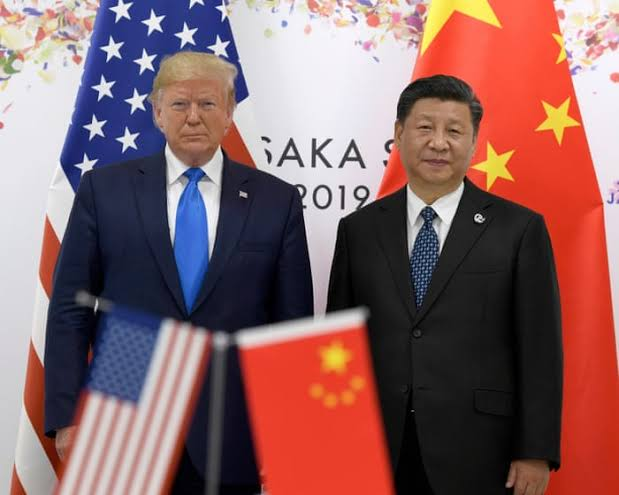
US President Donald Trump and Chinese President Xi Jinping are preparing for a September 24 summit in Washington that could have significant consequences for global companies, commodity markets and supply chains.
The meeting will be their second summit of 2026 and comes as Washington and Beijing attempt to manage disagreements spanning tariffs, technology, agriculture, critical minerals, energy and geopolitical issues. For global businesses, the central question is whether the two leaders can convert the existing trade truce into a more durable economic arrangement.
Rare Earths Could Become One of the Biggest Business Issues
Critical minerals are expected to occupy an important place in the talks because manufacturers in the United States and other countries remain heavily dependent on Chinese supply.
Rare-earth elements and related materials are essential to products ranging from electronics and electric vehicles to aerospace equipment and defence systems. US officials have repeatedly pushed China to improve the flow of these materials to American companies.
Yttrium has emerged as a particularly important pressure point. Chinese export controls have tightened access to the material, which is used in areas including semiconductors, aerospace and specialised coatings.
For manufacturers, any agreement improving access to critical minerals could ease supply-chain uncertainty. Continued restrictions could instead encourage companies and governments to accelerate efforts to develop alternative suppliers.
A $30 Billion Energy Proposal Is Drawing Attention
Energy could produce another important commercial development.
Reuters reported that a proposal involving roughly $30 billion in reciprocal tariff reductions could help revive US oil and gas exports to China, which stopped after tariffs were imposed.
The details remain subject to negotiation, meaning the figure should not be treated as a completed deal. But the possibility demonstrates how quickly political decisions can affect global energy flows.
US producers would benefit if access to the Chinese market improves, although the ultimate impact on liquefied natural gas companies could be complicated by how Chinese buyers use or resell imported cargoes.
Agriculture Is Back at the Centre of US-China Trade
American farmers also have a major stake in the summit.
Agricultural trade has repeatedly become a bargaining tool during periods of US-China tension. Soybeans remain particularly important because China is one of the world's largest buyers and US farmers depend heavily on export markets.
Reuters reports China is on track to meet a commitment involving 25 million metric tons of annual soybean purchases through 2028, while another potential package could involve approximately $17 billion of additional agricultural imports if tariff issues are resolved.
Any agreement could therefore have consequences for farmers, commodity traders, shipping companies and agricultural-equipment businesses.
Technology Competition Will Be Harder to Resolve
Trade in physical goods is only one part of the relationship. The United States and China are also competing over artificial intelligence, advanced semiconductors and other strategic technologies.
Washington has restricted Chinese access to some advanced chips and semiconductor technology, while Beijing has criticised US restrictions as an attempt to contain China's development. US officials have also raised concerns about Chinese companies acquiring American AI capabilities through prohibited methods, allegations Beijing rejects.
These disagreements may be considerably harder to solve than agricultural purchases because both governments increasingly view advanced technology as a national-security issue rather than simply a commercial one.
Major Chinese Business Leaders May Join Xi
The business dimension of the summit could become even more visible if senior Chinese executives travel with Xi.
Executives from companies including BYD, CATL and Xiaomi may participate in the visit, according to Reuters sources. Representatives from Gotion, Hisense, Wanxiang Group, Bank of China and COFCO Group have also been discussed as possible members of the delegation, although the final list has not been confirmed.
The companies represent some of the industries at the centre of US-China economic competition, including electric vehicles, batteries, consumer technology, banking and agriculture.
Their possible attendance highlights how decisions made by Trump and Xi can directly influence some of the world's largest corporations.
Tariffs Remain the Fundamental Business Question
The two countries have reduced some trade tensions, but significant tariffs and restrictions remain. Businesses importing goods between the United States and China therefore continue to operate with additional costs and uncertainty.
Companies dislike uncertainty because investment decisions often require planning years in advance. A manufacturer deciding where to build a factory needs some confidence about future tariffs, market access and supply-chain conditions.
A durable agreement could make those calculations easier. A renewed escalation could push more companies to diversify production away from either market.
The Summit Matters Far Beyond Washington and Beijing
US-China economic relations influence businesses worldwide because both countries sit at the centre of global trade.
China is a dominant manufacturing hub and major commodity consumer. The United States is the world's largest economy and home to many of the companies leading advanced technology development.
Changes in the relationship can therefore affect European manufacturers, Asian supply chains, commodity exporters, shipping companies and financial markets even when those businesses have no direct involvement in the negotiations.
That is why commodity traders are watching the September 24 meeting particularly closely.
What Businesses Should Watch on September 24
The most commercially important outcome may not be a dramatic new trade agreement. Businesses will also watch whether Trump and Xi extend existing arrangements, improve access to critical minerals, reduce selected tariffs or announce additional Chinese purchases of American products.
Agriculture, energy and rare earths offer areas where concrete transactions may be easier to negotiate. Advanced technology restrictions are likely to remain more difficult because they involve security as well as economics.
The summit therefore arrives with high stakes but considerable uncertainty.
Trump and Xi do not need to resolve every disagreement for markets to react. Even narrower agreements affecting tariffs, soybeans, energy or critical minerals could influence billions of dollars in trade.
For global businesses, September 24 will consequently be less about diplomatic ceremony and more about whether the world's two largest economies can provide something companies increasingly want: greater predictability about the rules governing US-China trade.