
Brookfield Bets $600 Million on India as Global Race for Green Fuels Accelerates
One of the world's largest alternative investment managers is making another major bet on India's expanding clean-energy economy.
Brookfield plans to invest up to $600 million in ACME Cleantech Ventures, an Indian company developing green-ammonia and green-methanol projects.
The investment, announced on September 17, represents another example of international capital moving towards infrastructure designed for a lower-carbon global economy.
It also illustrates an important change taking place inside the energy industry.
Renewable electricity was once the primary focus of clean-energy investment.
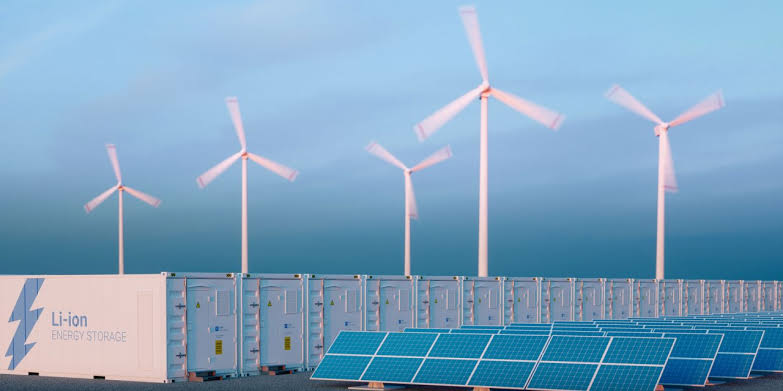
Solar panels and wind turbines remain critical, but investors are increasingly looking further down the industrial chain.
The question is no longer simply how to produce clean electricity.
It is also how that electricity can help decarbonise industries that cannot easily operate directly on renewable power.
Green ammonia and green methanol are two potential answers.
Why Brookfield's Investment Matters
Brookfield operates globally across infrastructure, renewable power, real estate, private equity and other alternative assets.
An investment of up to $600 million therefore represents more than a financing round for one company.
It demonstrates how major institutional investors are evaluating the next generation of energy infrastructure.
ACME is developing projects intended to produce green ammonia and green methanol, fuels that could eventually serve customers in industries where reducing carbon emissions is particularly difficult.
These projects require enormous amounts of capital.
Renewable electricity must be generated.
Electrolysers are needed.
Industrial processing facilities must be constructed.
Storage and transportation infrastructure may also be required.
That makes large institutional investors important.
What Is Green Hydrogen?
The story begins with hydrogen.
Hydrogen is already widely used in industrial processes.
The problem is how much of it is produced.
Traditional hydrogen production frequently relies on fossil fuels, creating carbon emissions.
Green hydrogen attempts to change that equation.
Electricity generated from renewable sources such as solar or wind can power electrolysers that split water into hydrogen and oxygen.
If renewable electricity powers the process, the resulting hydrogen can have a much lower operational carbon footprint than conventional fossil-fuel-based alternatives.
But hydrogen itself can be difficult to transport and store.
That is where other molecules become important.
Why Turn Hydrogen Into Ammonia?
Ammonia is already an essential global commodity.
It is particularly important for fertiliser production.
Green hydrogen can be combined with nitrogen to produce green ammonia, potentially lowering emissions associated with conventional ammonia production.
But ammonia has another attraction.
It can function as a carrier for hydrogen.
Transporting hydrogen over long distances can be technically challenging.
Converting it into ammonia may make international shipping more practical because an existing global ammonia industry already has experience with handling and transportation.
This creates the possibility of producing renewable energy in one country and effectively exporting some of that energy through green molecules.
Green Methanol Has Its Own Market
Methanol is another widely used industrial chemical.
It is used in manufacturing and has attracted increasing attention as a potential lower-carbon marine fuel.
Shipping is particularly difficult to decarbonise.
Large ocean-going vessels need enormous amounts of energy and travel long distances.
Battery systems that work well for passenger vehicles are not automatically practical for every large ship.
Alternative fuels therefore matter.
Green methanol is one of several options being explored by the shipping industry.
If demand develops as expected, companies capable of producing it at scale could serve an increasingly international customer base.
Why India?
India has several characteristics that make it important to the emerging green-fuels economy.
The country has enormous energy demand.
It also has strong renewable-energy potential, particularly from solar power.
At the same time, India is expanding its industrial and manufacturing base.
That combination creates both domestic demand and export opportunities.
Producing green hydrogen competitively depends heavily on electricity costs because electrolysis requires large amounts of power.
Regions capable of generating renewable electricity cheaply can therefore gain an advantage.
India wants to use that opportunity to develop not only renewable electricity but entire industrial value chains around it.
International Capital Is Looking at Indian Infrastructure
Brookfield's investment belongs to a broader flow of foreign capital into Indian infrastructure and technology.
Global investors increasingly view India as both a major domestic market and an international manufacturing platform.
The country's scale matters.
Even small changes in energy consumption across India's population and industrial economy can translate into substantial investment requirements.
Infrastructure investors often prefer exactly that kind of long-term demand.
Unlike consumer trends that can change rapidly, power plants, transmission networks and industrial facilities can operate for decades.
That makes infrastructure suitable for investors willing to commit capital over long periods.
Clean Energy Is Becoming Industrial Policy
Governments increasingly view clean-energy investment through more than an environmental lens.
It is also becoming industrial policy.
Countries want factories.
They want supply chains.
They want skilled jobs.
And they want greater energy security.
The result is competition to attract investment in batteries, solar manufacturing, hydrogen, semiconductors and other strategically important technologies.
India is participating aggressively in that competition.
A large international investment into domestic green-fuel production can therefore support several objectives simultaneously: energy transition, manufacturing, exports and infrastructure development.
The Hard Part Is Cost
Green fuels still face a major challenge.
They can be expensive.
Producing renewable electricity is only the beginning.
That power then has to be converted into hydrogen.
Hydrogen may then be transformed into ammonia or methanol.
Every additional step requires equipment and energy.
Facilities must also operate at sufficient scale to make the economics attractive.
For customers, environmental benefits matter, but price matters too.
A shipping company cannot ignore fuel costs.
A fertiliser producer cannot ignore feedstock prices.
That means the long-term success of green fuels depends on reducing production costs enough to compete with conventional alternatives.
Scale Could Change the Economics
This is where investments measured in hundreds of millions of dollars become important.
New industries often begin with expensive small-scale projects.
As production grows, manufacturers gain experience.
Supply chains develop.
Equipment becomes standardised.
Financing can become cheaper.
Those effects can gradually reduce costs.
Solar power provides an important historical example.
Photovoltaic technology was once extraordinarily expensive.
Decades of manufacturing expansion and technological improvement transformed the economics.
Green hydrogen supporters hope a similar process can occur with electrolysers and related infrastructure.
Whether it happens as quickly remains uncertain.
Global Demand Will Determine the Outcome
India can build green-fuel facilities, but long-term success ultimately depends on customers.
International buyers will need confidence that projects can deliver fuel reliably and competitively.
Standards will also matter.
A fuel marketed as "green" requires credible methods for calculating the emissions associated with its production.
Different markets may develop different certification requirements.
That could create complexity for exporters.
Businesses developing projects today therefore have to think about more than engineering.
They also need to anticipate regulations and customer requirements that may evolve over the lifetime of the facility.
Shipping Could Become an Important Customer
The global shipping industry is particularly relevant.
International maritime transport moves enormous quantities of goods but remains heavily dependent on fossil fuels.
Reducing those emissions is technically difficult.
Methanol and ammonia are both being considered as potential alternatives for parts of the shipping fleet.
Neither is a perfect solution.
New fuels require appropriate engines, storage systems, port infrastructure and safety procedures.
But if major shipping companies increasingly adopt lower-carbon fuels, demand could become substantial.
That creates a potential export market for countries capable of producing green molecules competitively.
Fertiliser Could Be Equally Important
Green ammonia does not depend entirely on future shipping demand.
Ammonia already has an enormous existing industrial market through fertilisers.
Agriculture depends on nitrogen fertilisers to maintain crop yields across much of the world.
Producing that ammonia can be emissions-intensive.
Replacing conventional hydrogen with green hydrogen could reduce part of that footprint without requiring the world to invent an entirely new use for ammonia.
That existing demand is strategically important.
New energy technologies are generally easier to commercialise when there is already a customer base for the underlying product.
The Investment Is Also a Globalisation Story
There is another important element here.
A global investment manager is directing capital into an Indian clean-energy company developing fuels that may eventually serve international customers.
That is global business in its most direct form.
Capital originates in one part of the world.
Infrastructure is constructed in another.
Technology and equipment may come from several countries.
The resulting product can then be sold internationally.
Modern energy projects increasingly operate through these cross-border networks.
The transition towards cleaner energy is therefore not eliminating globalisation.
In many areas, it is creating new forms of it.
India Is Trying to Move Up the Value Chain
Countries rich in renewable resources have a choice.
They can simply generate electricity.
Or they can use that electricity to manufacture higher-value products.
Green hydrogen, ammonia and methanol represent an attempt to move further along that value chain.
Instead of exporting only energy, a country can potentially export industrial molecules produced using that energy.
That can create additional infrastructure, jobs and technical capabilities domestically.
For India, the opportunity fits with a broader effort to expand its role in global manufacturing.
Brookfield Is Betting on What Comes After Renewable Power
The clean-energy investment story has already moved through several stages.
First came large-scale wind and solar development.
Then battery storage became increasingly important.
Now attention is spreading toward the industries that renewable electricity can support.
Green hydrogen sits near the centre of that transition.
Brookfield's planned investment of up to $600 million in ACME Cleantech Ventures is intended to support the development and construction of green-ammonia and green-methanol projects in India.
The size of the investment does not guarantee that green fuels will become commercially dominant.
Technology costs, regulation, infrastructure and customer demand will determine that.
But it sends an important business signal.
Major global investors are no longer looking only at the renewable electricity itself.
They are increasingly looking at what industries can be built with it.
And India wants to be one of the places where those industries take shape.