
China has reported stronger government revenue growth for the first eight months of 2026, providing investors with another important measure of the health of the world's second-largest economy as Beijing prepares additional policy support.
Fiscal revenue increased 5.7% year-on-year between January and August, according to China's Ministry of Finance. Government expenditure increased at a much slower rate of 1.2% over the same period. Revenue growth was slightly below the 5.8% recorded for January through July, while expenditure growth eased from 1.3%.
Why China’s Fiscal Revenue Matters
Government revenue provides insight into economic activity because taxes and other receipts are influenced by corporate profits, consumer spending, property activity and broader business conditions. Stronger revenue can give policymakers greater room to support strategic industries, infrastructure and social programmes without relying entirely on additional borrowing.
However, a 5.7% increase in fiscal revenue should not by itself be interpreted as proof that every part of China's economy is accelerating. The country continues to manage structural challenges while trying to support domestic demand and maintain growth amid international trade tensions.
That is why investors generally examine fiscal figures alongside industrial production, retail sales, exports, property indicators and credit data rather than relying on one measure.
Beijing Is Preparing More Support
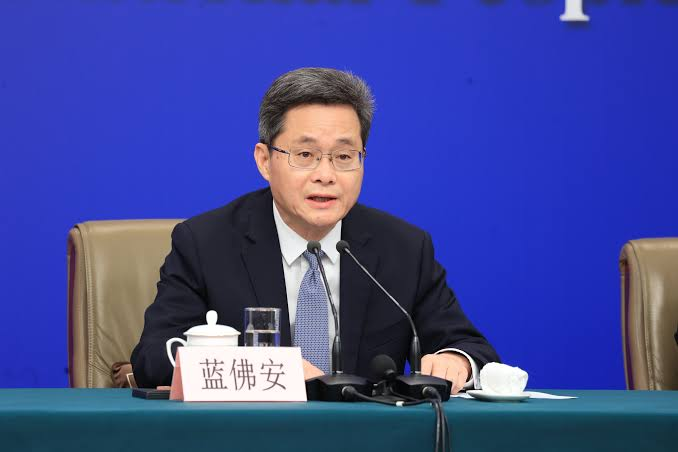
Vice Finance Minister Liao Min said authorities are preparing additional fiscal and financial support measures for the second half of the year. Policymakers also intend to adjust existing tools as economic conditions evolve.
The comments are important because China's economic strategy has become a major global-market issue. Measures designed to stimulate domestic consumption or business investment can influence demand for commodities, industrial equipment, technology and imported goods around the world.
China's policy decisions therefore matter well beyond Chinese financial markets.
Trade Tensions Remain a Major Variable
China's economic outlook is also closely connected to its relationship with the United States. President Xi Jinping is scheduled to meet US President Donald Trump in Washington on September 24, with trade expected to feature prominently in the discussions.
The two countries remain deeply economically connected despite years of tariffs, technology restrictions and strategic competition. Agricultural products, aircraft, energy, critical minerals and advanced technology are among the sectors affected by the relationship.
Any progress towards a more durable trade arrangement could therefore influence both Chinese and global business confidence.
China Still Holds Powerful Trade Leverage
Rare-earth minerals remain particularly important. China occupies a dominant position in the processing and supply of several materials required by advanced manufacturing, semiconductors, aerospace and defence industries.
Yttrium has become one prominent example. China's restrictions on exports of the material have affected supply chains and turned what was once an obscure industrial metal into an important trade-policy issue.
That leverage gives Beijing an important negotiating tool as it simultaneously tries to protect domestic economic growth.
Chinese Companies Are Expanding Globally
The strength of China's economy is increasingly connected to companies competing internationally in electric vehicles, batteries, smartphones, renewable energy and other advanced industries.
Executives from companies including BYD, CATL and Xiaomi may accompany Xi during his upcoming US visit, according to Reuters sources, although the final delegation has not yet been confirmed.
Their possible presence highlights how US-China relations have moved beyond traditional trade in consumer goods. Competition now involves technologies expected to shape future industrial growth.
Markets Will Watch What Beijing Does Next
The latest fiscal figures provide evidence that government revenue has continued growing, but markets will be more interested in how policymakers use that position.
Investors will watch whether new support targets household consumption, private companies, infrastructure, advanced manufacturing or other areas of the economy. The scale and timing of any measures will also matter.
China remains large enough that changes in its domestic economy can affect commodity prices, global manufacturers, multinational corporate earnings and financial markets around the world.
A 5.7% increase in fiscal revenue is therefore more than a domestic budget statistic. Combined with promises of additional policy support and an approaching US-China summit, it becomes another signal investors will use to judge where China's economy is heading during the remainder of 2026.