
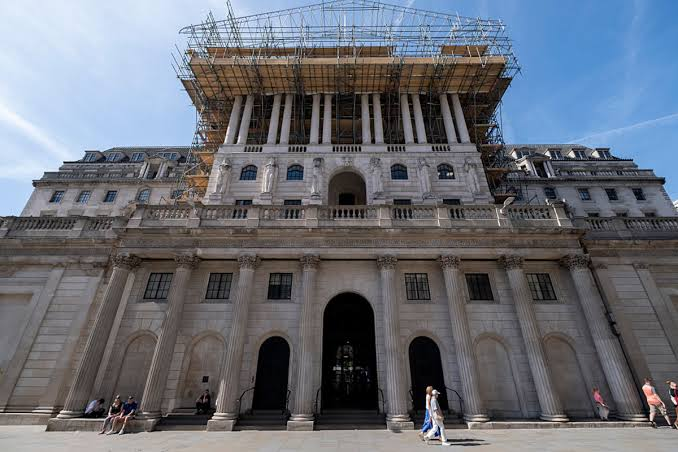
UK Bonds Rally as Bank of England Pauses £500 Billion Debt-Sale Programme
Britain's bond market received a rare dose of relief on Thursday after the Bank of England announced it would pause active sales from its enormous government-bond portfolio.
Investors responded quickly.
UK government bonds, known as gilts, rallied as markets welcomed the decision to suspend active bond sales until April and permanently end active sales of long-dated gilts.
The Bank simultaneously voted 6–3 to keep its benchmark interest rate unchanged at 3.75%.
The combination creates an unusual economic picture.
The Bank of England is trying to ease some of the pressure affecting government debt markets without declaring victory over inflation.
In fact, policymakers warned that inflation could rise above 4% in early 2027, particularly if elevated energy costs persist.
For households, businesses and investors, the message is therefore mixed.
Financial markets received support.
The inflation problem has not disappeared.
Why Was the Bank of England Selling Bonds?
To understand Thursday's decision, it helps to look back at what central banks did after major economic crises.
For years, the Bank of England purchased enormous quantities of government bonds through quantitative easing.
The objective was to push borrowing costs lower and support economic activity.
Those purchases left the Bank holding a vast portfolio of gilts.
As monetary policy later tightened, the Bank began reducing those holdings.
Part of that process involved allowing bonds to mature naturally.
Another part involved actively selling bonds back into the market.
This reversal is commonly described as quantitative tightening.
But selling bonds adds supply to the market.
At a time when the UK government itself also needs to borrow heavily, investors have increasingly questioned whether additional central-bank sales were adding unnecessary pressure.
Thursday's decision addresses that concern directly.
Nearly £500 Billion Is Still on the Balance Sheet
The scale is significant.
The Bank's government-bond holdings remain close to £500 billion, according to Reuters.
Reducing a portfolio that large was never going to happen quickly.
The important question is how aggressively the Bank should shrink it while markets are already absorbing substantial government borrowing.
By pausing active sales until April, policymakers are effectively removing one source of additional gilt supply for several months.
That does not mean quantitative tightening has completely ended.
Bonds can still mature without being replaced.
But it reduces the amount the Bank is actively placing into the market.
Investors Immediately Welcomed the Change
The reaction was particularly visible in long-dated bonds.
Britain's 30-year government-bond yield fell by around 12 basis points to 5.74% after the announcement, having reached 5.96% earlier in the week, its highest level since 1998.
Bond prices and yields move in opposite directions.
When investors buy bonds aggressively, prices rise and yields fall.
Thursday's move therefore indicated that investors viewed the Bank's decision positively.
Long-term government borrowing costs remain high by recent historical standards.
But removing additional selling pressure provided immediate relief.
Why Long-Term Yields Matter
Government bond yields are not numbers that matter only to professional traders.
They influence borrowing conditions across an economy.
Mortgage pricing can be affected by bond markets.
Companies use government yields as reference points when issuing their own debt.
Pension funds hold large quantities of long-term bonds.
Governments themselves must pay interest when they borrow.
A persistent increase in yields can therefore spread through the financial system.
For the UK government, higher borrowing costs are particularly important because interest payments can consume money that might otherwise be available for public services, investment or tax reductions.
The Inflation Problem Is Still There
The Bank's bond-market adjustment should not be confused with a move towards easier interest-rate policy.
Policymakers remain worried about inflation.
The Bank said inflation could exceed 4% next year, while Governor Andrew Bailey warned that continued disruption from conflict in the Middle East could require tighter monetary policy.
Energy prices are central to that concern.
When oil and gas become more expensive, households can face higher energy bills.
Businesses pay more for transportation and production.
Those costs can eventually spread through the prices of other goods and services.
That is why central banks watch energy shocks closely even though they cannot control the price of oil.
Oil Is Still Above $100
There was some relief in energy markets Thursday.
Brent crude fell about 3% to a one-week low as concerns about immediate supply disruptions eased.
Even after the decline, however, Brent remained above $100 a barrel.
That is important for the inflation outlook.
A short-term fall in oil prices does not necessarily mean energy pressure has disappeared.
Markets remain highly sensitive to supply disruptions and geopolitical developments.
The Bank therefore faces a difficult situation.
React too aggressively to temporary energy inflation and it could weaken economic growth unnecessarily.
Ignore persistent inflation and price pressures could become embedded more widely.
The Bank Held Rates — But Markets Expect More
Thursday's decision left the policy rate at 3.75%.
That does not mean investors believe it will remain there.
After the announcement, markets were assigning roughly a 75% probability to a rate increase in November, while almost four quarter-point increases were priced through 2027.
Market pricing changes constantly and should not be treated as a guarantee of future Bank decisions.
But it demonstrates how strongly investors are thinking about inflation risk.
The debate has shifted.
For much of the period following the previous inflation shock, investors focused on when central banks might reduce rates.
Now markets are again discussing how far rates might have to rise.
Britain Is Not Alone
The UK is part of a broader global shift.
The US Federal Reserve raised its benchmark rate by 25 basis points this week to 3.75%–4.00%, its first rate increase in more than three years.
Short-term US Treasury yields rose following the decision, while the dollar reached a seven-week high.
The Bank of Japan is also under pressure to tighten policy.
Central banks are responding to similar forces: resilient economies, elevated energy prices and renewed inflation concerns.
That creates a global environment in which borrowing costs may remain higher for longer than many businesses and households expected earlier in the year.
Businesses Have to Recalculate
For companies, higher interest rates affect much more than bank loans.
Businesses considering a new factory, acquisition or expansion project calculate whether the expected return justifies the cost of financing it.
As borrowing becomes more expensive, some investments no longer meet that test.
Highly indebted companies can face an additional challenge when older low-rate debt matures and must be refinanced at higher rates.
That can reduce profits even if the underlying business continues performing well.
The effect is especially significant for industries dependent on substantial borrowing, including property, infrastructure and capital-intensive manufacturing.
Government Finances Are Under Pressure Too
Higher yields also matter directly to governments.
Britain must continuously refinance existing debt while borrowing additional money to fund public spending.
When bond yields rise, newly issued debt becomes more expensive.
That can complicate fiscal policy.
A government may want to increase investment or provide tax relief, but higher debt-servicing costs can reduce the room available to do so.
This is one reason the bond market can suddenly become central to political and economic discussions.
Governments cannot completely control the price investors demand to lend them money.
Why the Bank's Decision Matters
The Bank of England is effectively trying to separate two policy tools.
Interest rates remain available to fight inflation.
Its balance sheet does not necessarily need to create additional pressure in a bond market already dealing with high yields.
Pausing active gilt sales allows the Bank to reduce that pressure without immediately cutting interest rates.
Investors clearly noticed the distinction.
The rally following Thursday's announcement suggests markets had been concerned about the additional supply created by the Bank's bond sales.
Relief Does Not Mean the Problem Is Solved
One strong day for bonds does not eliminate Britain's economic challenges.
Inflation remains elevated.
Energy markets remain volatile.
Government borrowing is substantial.
Interest rates could rise again.
And global bond markets have experienced months of pressure.
But Thursday's decision changes one part of the equation.
The Bank of England will stop actively selling gilts until April and has ended active sales of long-dated bonds altogether, while maintaining its benchmark interest rate at 3.75%.
For investors, that removes one immediate source of pressure.
For the wider economy, the harder question remains.
Can Britain bring inflation under control without pushing borrowing costs so high that households, businesses and government finances absorb too much damage?
The gilt market received some relief on Thursday.
The answer to that larger question will take much longer.