Xi Jinping’s White House Message Reframes China’s AI Strategy as a Call for Shared Safety and Human Control
During his state visit to Washington this week, Chinese president Xi Jinping urged joint US China action to keep artificial intelligence under human control. The comments, issued as Chinese state media published his remarks on September 26, highlight Beijing’s push to shape global AI rules while advancing domestic industry and security priorities.
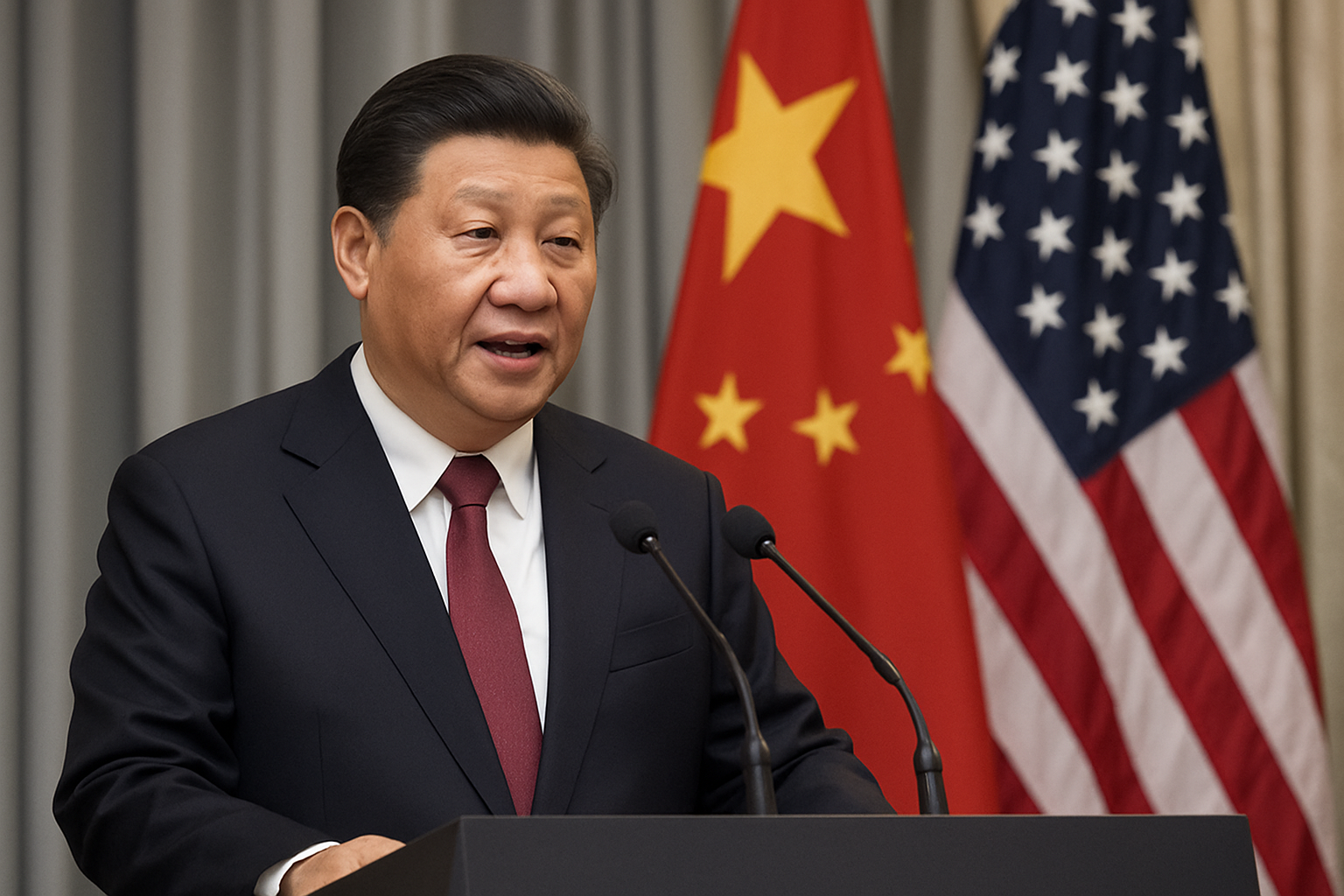
Xi Jinping used his high profile state visit to the United States to push a central theme in Beijing’s technology strategy, arguing that China and the United States share both capability and responsibility to keep artificial intelligence under human control and to steer the technology toward public welfare. The remarks, carried in Chinese state media and other outlets on September 26, crystallize a Beijing effort to position itself as a coauthor of global AI governance even as it fortifies domestic controls, standards and industrial policy. The message dovetails with an intense period of regulatory activity inside China this year. Beijing has moved from drafting nonbinding principles to issuing concrete governance frameworks and sector rules that require AI systems to include risk management, explainability and traceability features, and that mandate data localization and content labeling in certain areas. Chinese officials have framed those measures as necessary to protect public safety, national security and social stability while enabling homegrown firms to scale up advanced models and application platforms. Why Xi’s public emphasis matters When a head of state elevates technology policy to the state visit stage, it both signals political priority and sends a diplomatic signal. Xi’s urging that AI development “always” remain under human control is designed to do three things at once. First, it reassures international audiences, especially countries worried about runaway models, that Beijing supports guardrails on frontier systems. Second, it provides domestic legitimacy for regulators to tighten oversight of companies and data flows in the name of safety. Third, it frames China as a partner in setting global norms, which can amplify Beijing’s influence over standards and procurement practices across Asia and other regions. For Chinese technology firms and research centers, the posture shapes incentives. On one hand, positioning safety as a priority reduces the political risk of unchecked commercialization of powerful models that could spur social disruption. On the other hand, the same safety framing is often paired with stricter export controls, travel restrictions on personnel in sensitive sectors, and requirements that models comply with domestic standards before being deployed overseas. Those measures can raise costs and complicate cross border cooperation for multinational teams and suppliers. Domestic policy and industry reaction Throughout 2026, Chinese regulators have revised AI security frameworks and issued guidance targeted at high risk applications. Standards-setting bodies and ministries have accelerated work on technical specifications for model interoperability, labeling of synthetic content, and security assessments for autonomous AI agents. These steps reflect a broader strategy to combine industrial support for leading AI companies with rules that limit uncontrolled behavior by models and their operators. Industry actors in China are responding by productizing safety features, integrating provenance and watermarking into generative models, and promoting enterprise applications that emphasize deterministic outputs and explainability. At the same time, major cloud and chip companies in China are continuing to invest in larger models and specialized accelerators, seeking to reduce reliance on foreign hardware and ensure supply chain resilience. Global implications and the middle path Xi’s remarks are likely to complicate, while also opening space for, international policymaking on AI. A cooperative framing can help unlock technical exchanges on incident notification, safety testing and crisis deescalation mechanisms. Yet cooperation will remain difficult because of deepening restrictions on transfers of semiconductors, tooling and talent that governments now use to protect core technologies. For countries and companies outside of China, the practical consequence will be a more fragmented global AI landscape, where different blocs converge around distinct regulatory and technical norms. That fragmentation can slow the diffusion of best practices, but it also creates openings for harmonized, niche agreements on safety critical topics such as incident reporting, red teaming protocols, and verification of model provenance. What to watch next Over the coming months, Beijing’s domestic rule making will be a crucial signal. Watch for three indicators: whether Chinese authorities publish new, binding rules that narrow permissible cross border model training or dataset transfers; whether regulators require mandatory external safety audits or certifications for large scale models; and whether China intensifies work on national standards for interoperability among AI agents. Each move will shed light on how Beijing intends to balance industrial ambition with the security and social controls it has repeatedly prioritized. Xi’s public call for joint responsibility on AI reframes an ongoing debate. For Chinese policymakers, the priority is clear: channel AI to serve economic modernization and social governance goals, while claiming a seat at the table where international norms for safety and control are written. For the rest of the world, those claims will add urgency to efforts to build robust, practical mechanisms for cross border cooperation on AI safety, even as geopolitical competition shapes the limits of what can be shared.
Topics
LocationBeijing