
$25 Billion AkzoNobel-Axalta Merger Faces UK Competition Investigation
One of the world's largest proposed industrial mergers is facing a new regulatory test.
Britain's competition watchdog has opened an investigation into the planned $25 billion merger between AkzoNobel and Axalta, examining whether combining the two major coatings businesses could significantly reduce competition in the UK.
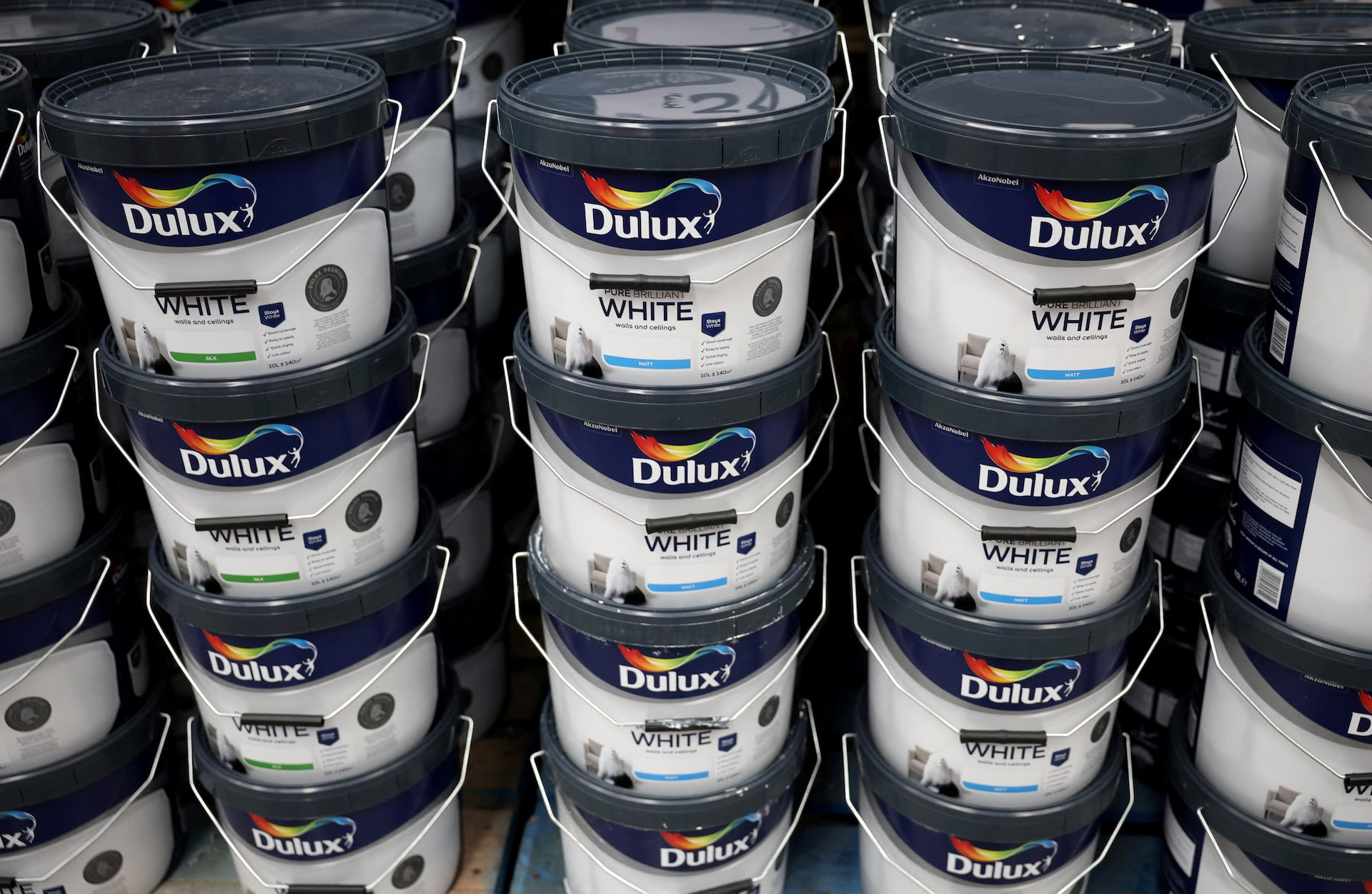
AkzoNobel is the Dutch company behind well-known paint brands including Dulux, while US-based Axalta specialises heavily in coatings used across automotive, industrial and other commercial applications.
The investigation does not mean regulators have decided to block the transaction.
Instead, it begins the process of determining whether bringing the businesses together could give the combined company excessive influence in parts of the market.
For the wider business world, the review illustrates an increasingly important reality of major mergers:
Signing a multibillion-dollar deal is only the beginning.
Why the Companies Want to Combine
Large industrial mergers are rarely pursued simply because executives want a bigger company.
Scale can create important economic advantages.
A larger coatings business can spread research costs across more products and customers. It can potentially negotiate more effectively with suppliers, combine manufacturing operations and reduce duplicated corporate expenses.
Global reach matters too.
Industrial customers increasingly operate across multiple regions and may prefer suppliers capable of providing consistent products and technical support in several countries.
A larger combined company can potentially serve those customers more efficiently.
That is the business argument for consolidation.
Regulators, however, have to examine the other side of the equation.
When Does Bigger Become Too Big?
Competition authorities generally do not oppose companies merely because they become large.
The key question is what happens to competition after the merger.
Imagine a market containing several major suppliers.
If two important competitors combine, customers may have fewer alternatives when negotiating contracts.
That can potentially influence prices, product choice, service quality or innovation.
Regulators therefore examine where the companies compete directly, how much market share they hold and whether customers could easily switch to another supplier.
They may also study whether new competitors could realistically enter the market.
In highly specialised industries, that last question can be particularly important.
Building a new manufacturing operation requires capital, technology, expertise and customer relationships.
Competition cannot always be recreated quickly.
Paint Is Only Part of the Story
Consumers may recognise AkzoNobel through decorative paints, particularly Dulux.
But the global coatings industry extends far beyond paint purchased for homes.
Specialised coatings are used on vehicles, aircraft, industrial equipment, buildings and countless manufactured products.
In many applications, coatings perform technical functions rather than merely changing appearance.
They can protect metal against corrosion.
They can improve resistance to chemicals.
They can help products survive extreme weather.
Some coatings need to meet precise performance or regulatory standards.
That makes industrial coatings an important part of global manufacturing supply chains.
Axalta Brings a Strong Automotive Presence
Axalta has significant exposure to automotive coatings.
These include products used during vehicle manufacturing as well as refinishing systems used when cars require repair.
Automotive customers can have demanding technical requirements.
A coating must provide the correct appearance while remaining durable and compatible with industrial production processes.
Long-standing supplier relationships can therefore matter.
That is one reason regulators examining industrial mergers often look deeper than the companies' overall revenue.
Two businesses might appear diversified globally while still competing very closely within a specific product category.
Regulators Can Examine Individual Markets
Competition investigations frequently divide businesses into narrower segments.
Rather than asking whether AkzoNobel and Axalta dominate "paint", regulators could examine specific types of coatings, customers or geographic markets.
They may ask whether a manufacturer has several credible suppliers available.
They may examine whether customers negotiate contracts nationally or internationally.
They can also investigate how difficult it would be for customers to change products after a supplier increases prices.
Those details can determine whether a transaction receives approval without conditions, requires modifications or faces a deeper investigation.
The UK Review Is Part of a Larger Regulatory Journey
A transaction of this size can require approvals across several jurisdictions.
Global companies operate across borders, meaning a merger can fall under the authority of multiple competition regulators.
That creates complexity.
A deal acceptable in one jurisdiction may attract concerns in another because local market conditions differ.
Companies planning global mergers therefore have to prepare for a regulatory process that can take months.
The UK investigation announced Thursday is now one part of that wider process.
Regulators Can Demand Remedies
Competition investigations do not always end with a simple yes or no.
Sometimes regulators identify concerns but allow a transaction to proceed if the companies make changes.
One possible remedy is selling particular businesses or manufacturing assets to another company.
Another can involve licensing technology or maintaining access for customers.
The objective is to preserve enough competition while allowing the broader transaction to continue.
Whether remedies will be required in the AkzoNobel-Axalta case will depend on what regulators discover.
At this stage, the UK authority is investigating rather than announcing a conclusion.
Consolidation Is Reshaping Global Industry
The coatings deal also belongs to a much wider corporate trend.
Companies in sectors ranging from aerospace to technology are using acquisitions to strengthen supply chains, obtain specialised capabilities and expand into new markets.
GE Aerospace, for example, recently agreed to acquire Consolidated Precision Products for about $12 billion, a transaction intended partly to address supply bottlenecks in critical jet-engine components.
Different industries have different motivations, but the underlying logic is often similar.
Companies want greater control.
They want scale.
And they want capabilities that would take years to build internally.
Scale Can Help Innovation — But Competition Matters
There is an economic tension at the centre of many large mergers.
Combining companies can create more resources for research and development.
A larger manufacturer may be able to invest more heavily in new materials, sustainable coatings, manufacturing technology and product development.
But competition itself also drives innovation.
When several businesses fight for the same customers, they have incentives to improve products, lower costs and develop new solutions.
Competition regulators therefore have to consider both sides.
They are not simply asking whether the merged company could become more efficient.
They are asking what happens to the market surrounding it.
Customers Will Be Watching Closely
For large commercial customers, supplier consolidation can have immediate practical implications.
Purchasing departments care about price.
Manufacturers care about reliability.
Engineers care about technical performance.
Businesses also increasingly care about supply-chain resilience.
Depending too heavily on one supplier can become risky if a factory experiences disruption or a geopolitical event interrupts deliveries.
Customers therefore often prefer maintaining several viable suppliers even when one large company can provide attractive pricing.
That makes the structure of industrial markets commercially important beyond the companies directly involved in a merger.
Investors Face Regulatory Uncertainty
Major transactions also create uncertainty for shareholders.
Investors have to estimate not only whether the strategic logic makes sense but whether regulators will allow the deal to proceed in its original form.
A lengthy investigation can delay expected savings.
Required asset sales can change the financial benefits.
A blocked deal can create substantial costs after companies have already spent heavily on advisers, lawyers and integration planning.
Regulatory risk has therefore become a major component of modern merger analysis.
A $25 Billion Deal Enters Its Next Test
AkzoNobel and Axalta may see substantial strategic advantages in creating a larger global coatings company.
UK regulators now have a different responsibility.
They must determine whether those advantages can be achieved without substantially weakening competition.
Britain's Competition and Markets Authority opened its investigation on September 17, 2026, specifically examining whether the proposed $25 billion combination could lead to a substantial lessening of competition in the UK.
That question will ultimately matter more than the headline value of the transaction.
Because in a deal this large, the challenge is no longer simply convincing shareholders that two companies belong together.
It is convincing regulators that customers will still have enough meaningful alternatives after they do.