
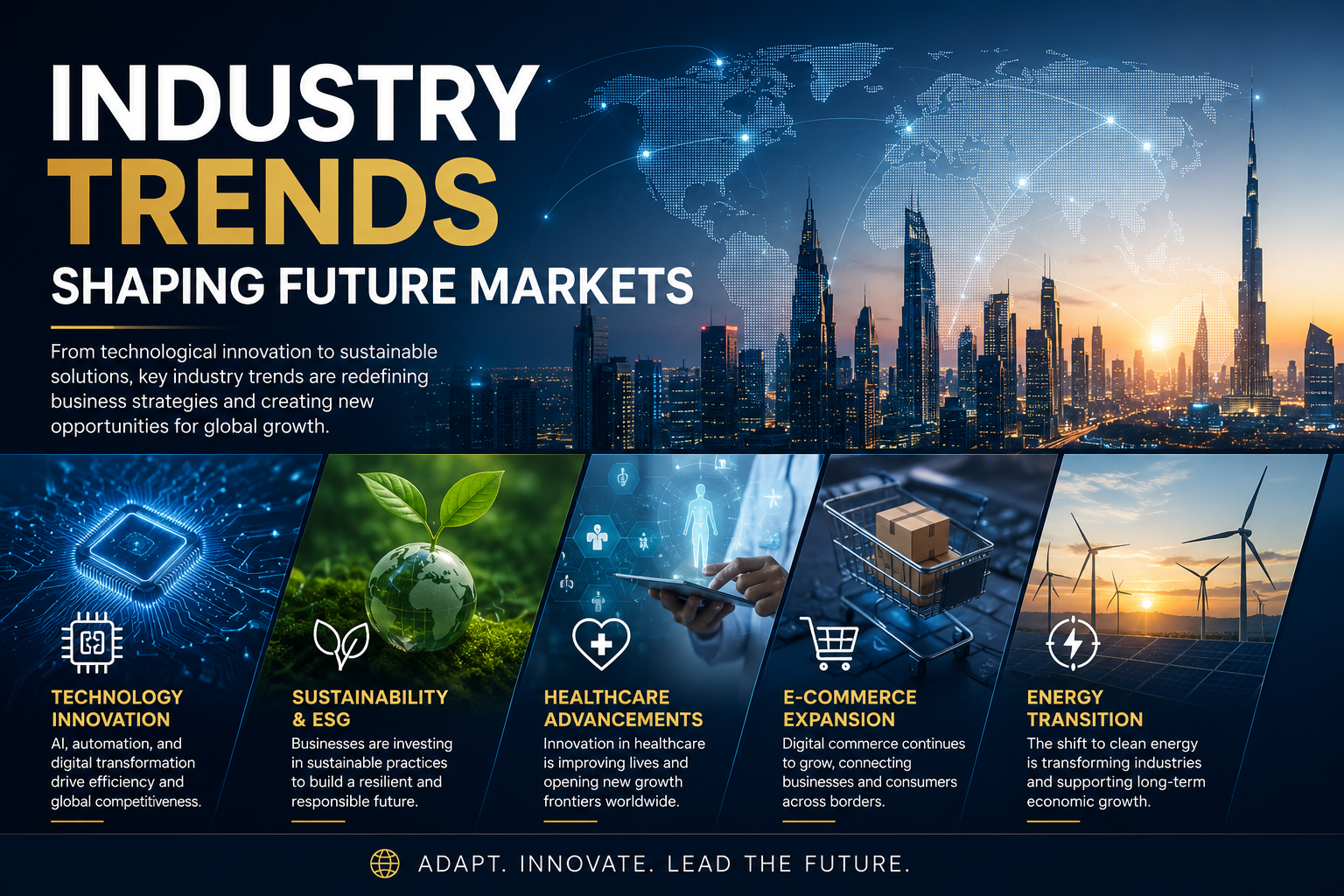
Explore the latest Industry Trends influencing innovation, investment, technology, and business growth across global markets.
Industry Trends Shaping Future Markets
Markets around the world are evolving at an unprecedented pace as technological innovation, shifting consumer expectations, and global economic changes redefine the business landscape. Understanding Industry Trends allows organizations to anticipate change, identify new opportunities, and make informed strategic decisions that support long-term growth.
Businesses that stay ahead of emerging trends are better equipped to adapt, remain competitive, and create lasting value in dynamic markets.
What Are Industry Trends?
Industry Trends are long-term patterns and developments that influence how businesses operate, compete, and grow within specific sectors. These trends are driven by advancements in technology, regulatory changes, customer behavior, economic conditions, and global events.
Monitoring industry trends helps organizations:
- Identify growth opportunities
- Respond to market changes
- Improve strategic planning
- Enhance operational efficiency
- Develop innovative products and services
Businesses that understand these trends are more prepared to navigate future challenges.
Why Industry Trends Matter
Markets are becoming increasingly competitive, making it essential for organizations to recognize emerging developments before they become mainstream.
The benefits of tracking Industry Trends include:
- Better business planning
- Increased innovation
- Improved investment decisions
- Stronger competitive positioning
- Enhanced customer satisfaction
- Greater long-term resilience
Companies that embrace change are often better positioned to achieve sustainable success.
Digital Transformation Continues to Accelerate
Digital transformation remains one of the most significant trends shaping modern industries.
Businesses are investing in technologies such as:
- Cloud computing
- Artificial intelligence
- Machine learning
- Data analytics
- Business automation
- Internet of Things (IoT)
These technologies improve efficiency, reduce costs, and support faster decision-making.
Sustainability Is Becoming a Business Priority
Environmental responsibility is increasingly influencing corporate strategy. Modern Industry Trends show that businesses are investing in sustainable operations to meet customer expectations and regulatory requirements.
Common sustainability initiatives include:
- Renewable energy adoption
- Sustainable supply chains
- Energy-efficient operations
- Waste reduction programs
- Environmentally responsible product design
Organizations that prioritize sustainability often strengthen their reputation and attract environmentally conscious customers.
The Rise of Data-Driven Decision-Making
Businesses now rely heavily on data to guide strategic decisions. Advanced analytics provide valuable insights into customer behavior, operational performance, and market opportunities.
Data-driven strategies support:
- Better forecasting
- Improved customer experiences
- Risk management
- Product development
- Marketing optimization
Organizations that effectively leverage data gain a significant competitive advantage.
Workforce Evolution
Changing workforce expectations continue to reshape business operations.
Current Industry Trends include:
- Remote and hybrid work models
- Continuous employee learning
- Digital collaboration tools
- Flexible work arrangements
- Skills development initiatives
Businesses that invest in employee well-being and professional development are better positioned to attract and retain top talent.
Customer-Centric Business Models
Consumers increasingly expect personalized, convenient, and responsive experiences. Businesses are placing greater emphasis on understanding customer preferences and delivering tailored solutions.
Customer-focused strategies include:
- Personalized services
- Omnichannel experiences
- Faster customer support
- Loyalty programs
- Enhanced digital engagement
Building strong customer relationships supports long-term business growth.
Innovation Across Industries
Innovation remains one of the strongest drivers of future market growth. Organizations are continuously exploring new technologies, products, and business models to remain competitive.
Emerging areas of innovation include:
- Financial technology (FinTech)
- Healthcare technology
- Smart manufacturing
- Clean energy solutions
- Digital commerce
- Artificial intelligence applications
Companies that foster innovation are more likely to capitalize on new market opportunities.
Preparing for Future Industry Trends
The pace of change will continue to accelerate as technology and globalization reshape industries. Businesses should regularly evaluate market developments, invest in innovation, and remain flexible when responding to changing customer and economic conditions.
By staying informed about Industry Trends, organizations can build strategies that support resilience, adaptability, and sustainable growth.
Conclusion
Industry Trends are shaping the future of global markets by influencing technology adoption, sustainability, workforce development, customer expectations, and innovation. Businesses that monitor these developments and adapt proactively are better positioned to compete in an increasingly dynamic economy.
By embracing change and making informed strategic decisions, organizations can unlock new opportunities, strengthen their competitive advantage, and achieve lasting success in the evolving global marketplace.
