
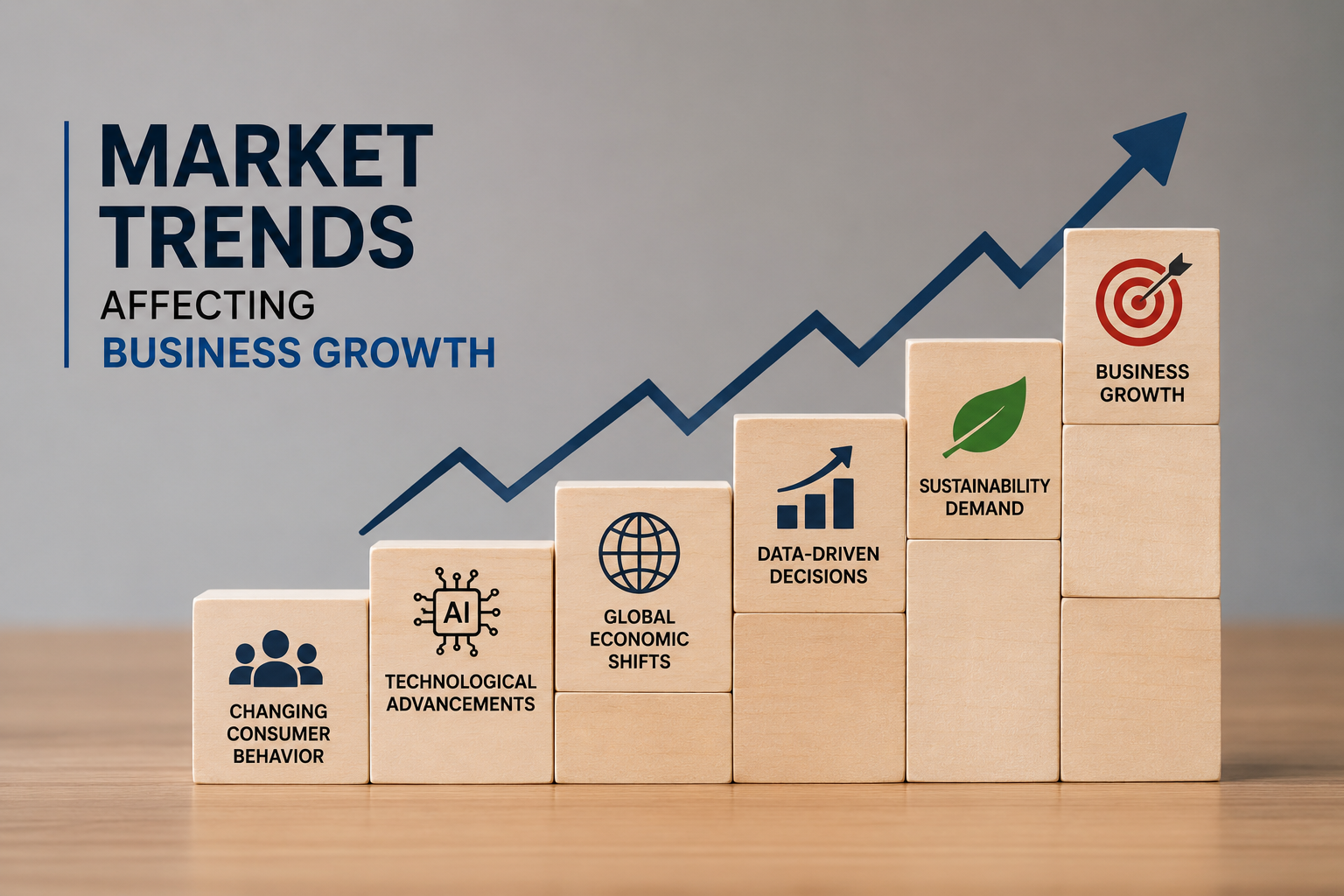
Discover the latest Market Trends influencing business growth, including digital transformation, consumer behavior, AI, and economic changes.
Market Trends Affecting Business Growth
Businesses operate in an environment that is constantly changing due to technological advancements, economic developments, and shifting customer expectations. Understanding current Market Trends helps organizations identify new opportunities, reduce risks, and make informed decisions that support sustainable growth. Companies that closely monitor these trends are better equipped to remain competitive in an evolving global marketplace.
Digital Transformation Continues to Accelerate
Digital transformation remains one of the most influential Market Trends affecting businesses today. Companies are investing in cloud computing, automation, digital communication platforms, and data analytics to improve efficiency and enhance customer experiences.
Organizations that embrace digital technologies can respond more quickly to market changes while increasing productivity and reducing operational costs.
Artificial Intelligence Drives Innovation
Artificial intelligence (AI) has become a valuable business tool across many industries. AI supports customer service, marketing, inventory management, financial forecasting, and business analytics.
Businesses that integrate AI into their operations gain valuable insights, automate repetitive tasks, and improve decision-making, helping them maintain a competitive advantage.
Changing Consumer Behavior
Consumer preferences continue to evolve as customers demand greater convenience, personalization, and transparency. Businesses that understand customer expectations can develop products and services that better meet market demand.
Collecting customer feedback and analyzing purchasing behavior help organizations stay aligned with changing market needs.
Growth of E-Commerce
Online shopping continues to expand globally, creating new opportunities for businesses of all sizes. Consumers increasingly prefer convenient digital purchasing experiences supported by secure payment options and fast delivery.
Companies investing in user-friendly websites, mobile applications, and digital marketing strategies can reach wider audiences and increase sales.
Sustainability Influences Purchasing Decisions
Environmental awareness has become an important factor in consumer purchasing decisions. Many customers choose businesses that demonstrate responsible environmental practices, ethical sourcing, and sustainable operations.
Adopting sustainable business practices strengthens brand reputation while supporting long-term growth.
Hybrid Work Reshapes Business Operations
Flexible work arrangements continue to influence organizational structures and workforce management. Businesses are adopting hybrid work models supported by cloud technology, digital collaboration tools, and secure communication systems.
This flexibility improves employee satisfaction while enabling companies to attract skilled professionals.
Data-Driven Business Decisions
Businesses increasingly rely on real-time data to guide strategic planning. Data analytics helps organizations forecast demand, optimize pricing, improve customer engagement, and identify new market opportunities.
Companies that make informed decisions based on reliable data often achieve stronger financial performance.
Cybersecurity Becomes Essential
As businesses rely more heavily on digital infrastructure, cybersecurity has become a major priority. Protecting customer information, financial data, and business systems is essential for maintaining trust and ensuring uninterrupted operations.
Organizations continue investing in advanced security technologies and employee awareness programs.
Global Supply Chain Adaptation
Businesses are strengthening supply chains by diversifying suppliers, improving inventory management, and adopting digital logistics solutions. These strategies help reduce risks associated with global disruptions and changing trade conditions.
A resilient supply chain supports consistent business operations and customer satisfaction.
Continuous Innovation Supports Growth
Innovation remains one of the most important Market Trends for long-term success. Businesses that continuously improve products, services, and internal processes are better prepared to meet changing customer expectations.
A culture of innovation encourages adaptability while creating new opportunities for expansion.
Preparing for Future Market Trends
Organizations should regularly monitor industry developments, invest in technology, strengthen employee skills, and maintain flexible business strategies. Businesses that anticipate change rather than react to it are more likely to succeed in competitive markets.
Understanding future Market Trends enables companies to make proactive decisions that support sustainable growth.
Conclusion
Modern Market Trends are reshaping how businesses operate, compete, and grow. Digital transformation, artificial intelligence, sustainability, changing consumer behavior, e-commerce, cybersecurity, and innovation continue to influence business success across industries. Companies that stay informed, adapt quickly, and invest in continuous improvement will be well positioned to achieve long-term growth in an increasingly dynamic global economy.
FAQs
1. What are Market Trends?
Market Trends are ongoing changes in consumer behavior, technology, economic conditions, and industry developments that influence business performance.
2. Why are Market Trends important for businesses?
They help businesses identify opportunities, understand customer needs, reduce risks, and make informed strategic decisions.
3. Which Market Trends are shaping business growth in 2026?
Digital transformation, artificial intelligence, sustainability, e-commerce, hybrid work, cybersecurity, and data-driven decision-making are among the leading trends.
4. How can businesses respond to changing Market Trends?
Businesses should monitor industry developments, invest in innovation, improve customer experiences, adopt digital technologies, and remain flexible in their strategies.
5. How do Market Trends affect business growth?
They influence customer demand, operational efficiency, competitive positioning, investment decisions, and long-term profitability, making them essential for sustainable business success.
